
Case study
Pool Butler
DeliveredCustom field-service software built for a Knoxville, TN pool service and building company. AI-assisted scheduling and routing, pool chemical dosing recommendations, and GPS check-in run the day-to-day work that a licensed, off-the-shelf tool used to run at three times the cost.
Delivered for a client — not Mule AI’s own product
Custom field-service software delivered for a Knoxville, TN pool service and building company. The client is not named here, at their request. This is client work — not a Mule AI pilot and not our own product.
The problem
The client was running its schedule, technicians and inventory on licensed field-service software priced for a generic operation, at roughly three times what a system built for their actual business should cost. That software still could not see the parts of the job that made this business different: a construction arm running multi-phase pool builds — rebar, rough plumbing, permit inspections — alongside the routine chemical-service routes, all needing to live on the same board.
How it works
The pipeline, step by step
- 1
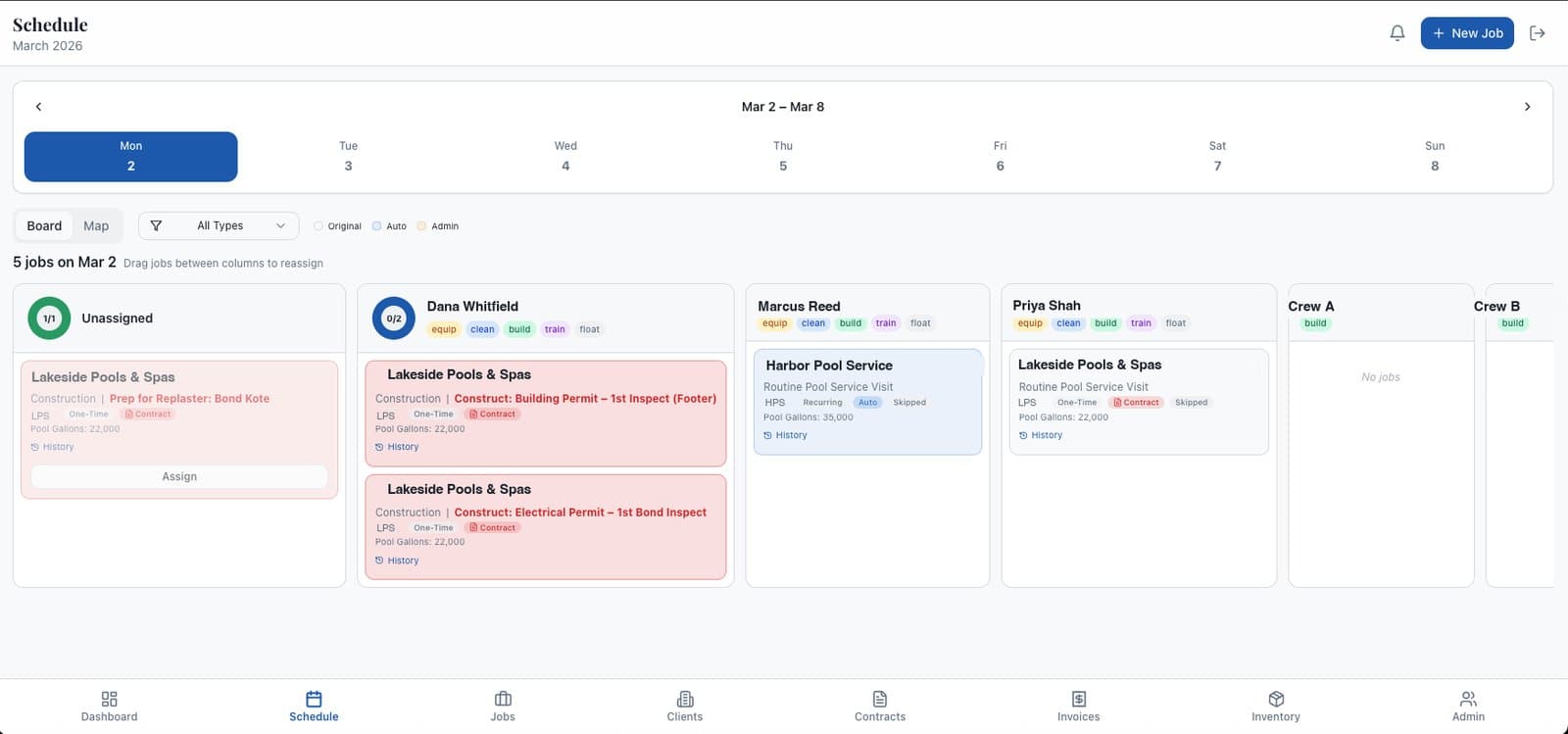
Weekly schedule board
A Board and Map view of the week, with a column per technician and a crew, plus an unassigned queue so nothing waits on a job nobody has picked up. Jobs drag from column to column to reassign.
- 2
AI scheduling and routing
The system proposes which technician and day a job should land on, instead of a dispatcher rebuilding the week by hand every morning.
- 3
Job types, side by side
Recurring routes, one-time visits and multi-phase contract construction — rebar installation, rough plumbing, permit inspections — all carry their own tags and sit on the same board and the same jobs list, filterable by scheduled, in progress, completed or skipped.
- 4
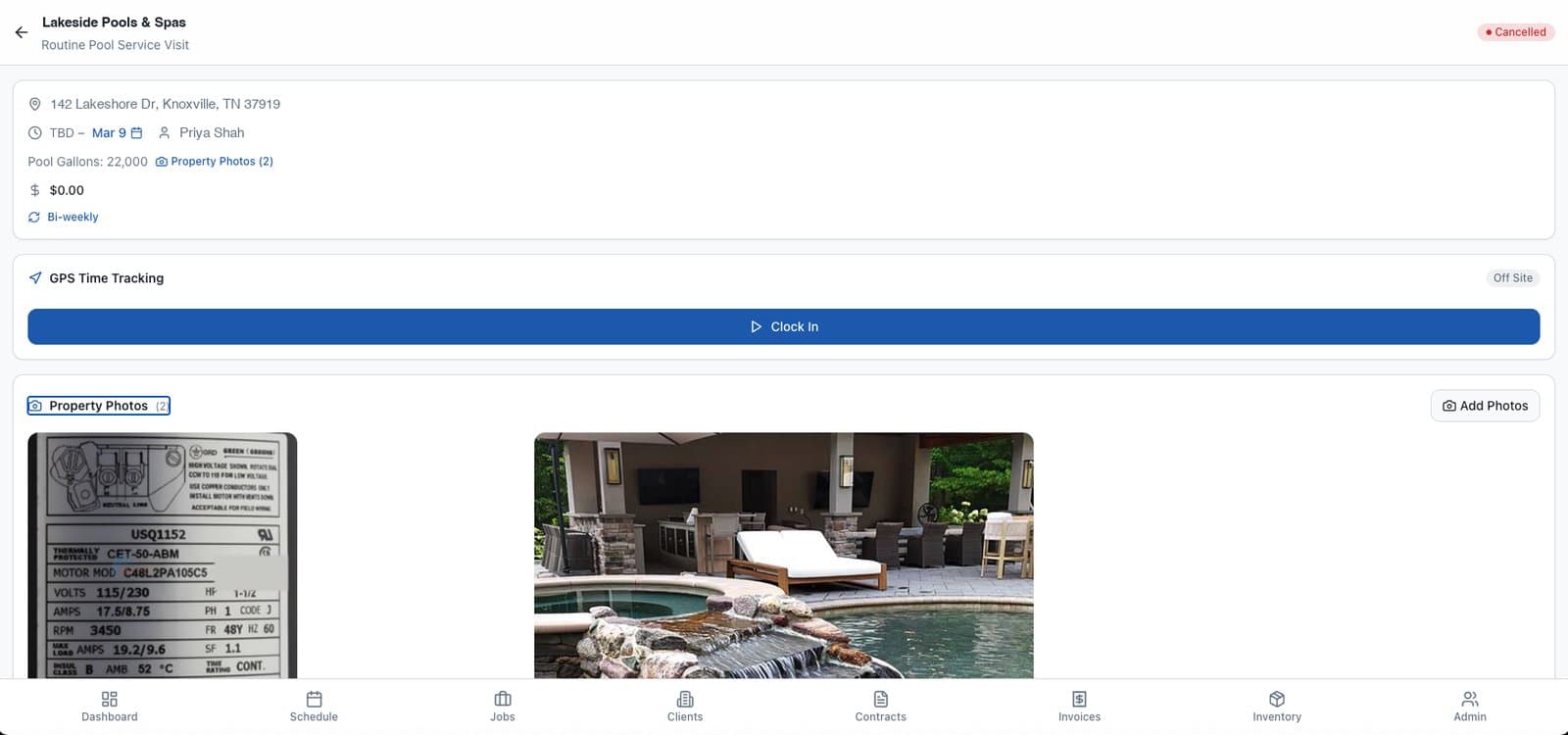
On-site verification
GPS clock-in records a real arrival at the property, not a technician’s word for it. Property photos and equipment nameplates attach straight to the job record.
- 5
Chemical readings and dosing
Pool chemistry readings are logged per visit, with the system recommending a dosage rather than leaving it to a technician’s memory or a paper log.
- 6
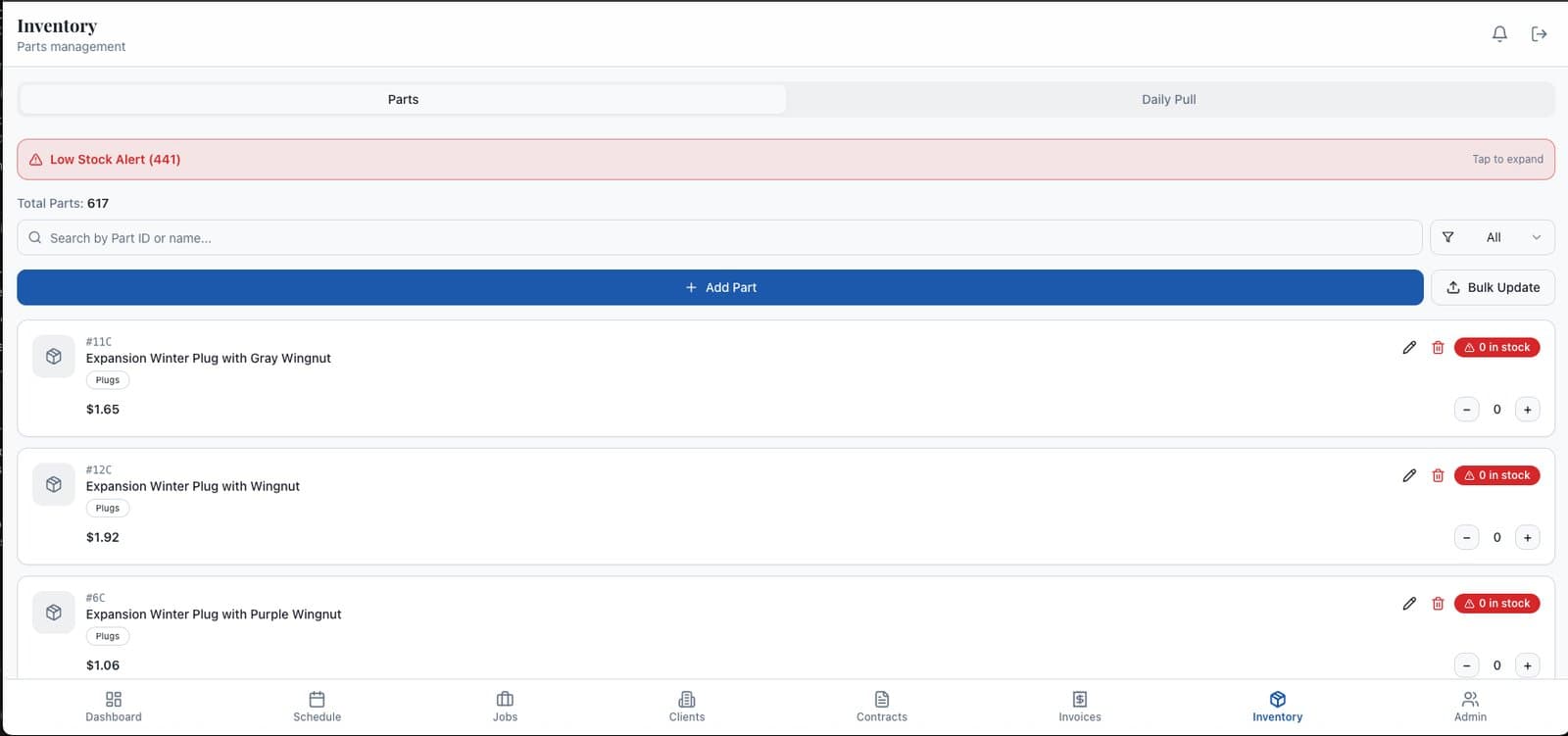
Inventory that flags itself
A 617-part inventory tracks stock automatically, flags what is low — 441 parts, at the point this was written — and supports a bulk update and a daily-pull view for loading the truck each morning.
What it produced
The numbers, from one run
Roughly two-thirds
Line-item cut
Replaced licensed software that cost about three times as much as Pool Butler
More than $10,000/year
Annual savings
The one hard outcome number this case study reports
617
Parts tracked
The client’s full parts inventory, with bulk update and a daily-pull view
441 of 617
Low-stock flags
Flagged automatically rather than counted by hand
The real product
Not a mockup
What this means for a business like yours
Licensed field-service software is priced for a generic operation and still makes you bend your business to fit it. This client was paying three times Pool Butler’s cost for exactly that trade-off — and still had to run their multi-phase construction jobs around software that only understood routine service visits. Custom did not mean expensive here; it meant a system that finally matched how the business actually works, at a fraction of what the generic version cost.
What we did not measure
The software’s own operational outcomes — route efficiency, time saved per job, chemical-dosing accuracy — were not instrumented, so none are claimed here. The verified result is the cost replacement: what the client used to pay for licensed software, cut by roughly two-thirds.