
Case study
MarketingPilot AI — Content Studio
In developmentGenerates brand-consistent ad content end to end. A brand voice document and reference assets go in; competing story concepts come back, the chosen one expands into per-scene prompts, scenes generate, and the result assembles itself into a rough cut inside Premiere Pro.
Delivered for Planet H2O, on Mule AI’s own platform
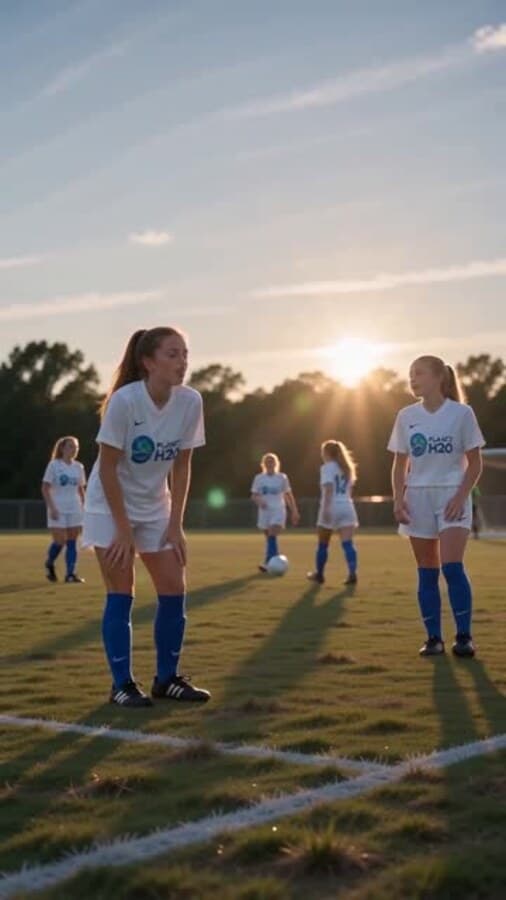
Every scene in this case study was produced inside Mule AI’s own Content Studio platform for Planet H2O, a signed client. The platform itself is Mule AI’s own build; what it produced here was delivered work for a real client, not creative made on spec.
The problem
Keeping one brand consistent across dozens of independently generated ad scenes is what actually breaks most AI content pipelines — not the generation itself. Ask a model for eight separate shots and it will invent eight slightly different bottles, eight slightly different people and eight slightly different afternoons. We wanted a system where the brand voice, the product and the cast stay identical from the first scene to the sixty-seventh, without hand-fixing every frame afterward.
How it works
The pipeline, step by step
- 1
Brand Foundation
A brand voice document, a product description and the audience are loaded once and become the ground truth for everything generated after — carried verbatim, not summarised.
- 2
Category Intelligence
Competitor films are ingested, watched by a vision model and scored against a closed vocabulary of pacing, hook, archetype and production tier, so the next brief is written from what is actually outperforming the category.
- 3
Concept
A short brief returns competing story concepts, each with a title, a logline and a narrative shape. One is approved before a single frame is generated.
- 4
Storyboard
The approved concept expands into timed beats with narration, and locks the style, location and cast for the whole film.
- 5
Generation & Assembly
Scenes generate independently, then reconcile against the same locks. Narration, music and ambience are produced alongside the picture and assembled into a rough cut inside Premiere Pro over a UXP panel.
What it produced
The numbers, from one run
13
Briefs written
Each returning competing story concepts before any generation
13
Concepts approved
One approved per brief before a single frame was generated
67
Scenes generated
Across all thirteen approved films
405s
Footage produced
Roughly seven minutes, every frame generated — no shoot day
20
Locked identities
Reused verbatim across every scene an identity appears in
22
Reference plates
Attached to every scene the identity they describe appears in
The real product
Not a mockup


What this means for a business like yours
Consistency is the part of AI ad content that actually breaks pipelines, not generation. Content Studio keeps a bottle, a face or a location the same across every scene it appears in by describing it once — as a locked identity plate with reference images attached — and repeating that description verbatim into every prompt that needs it, rather than asking a model to reinvent it from scratch each time.
What we did not measure
Planet H2O has signed, but nothing generated for them has been published anywhere yet — the sixty-seven scenes shown here exist inside Content Studio, not in the world. The system also does not yet measure what happens after a scene ships, because nothing has shipped. That publishing-and-measurement loop is the next build, not this one.